
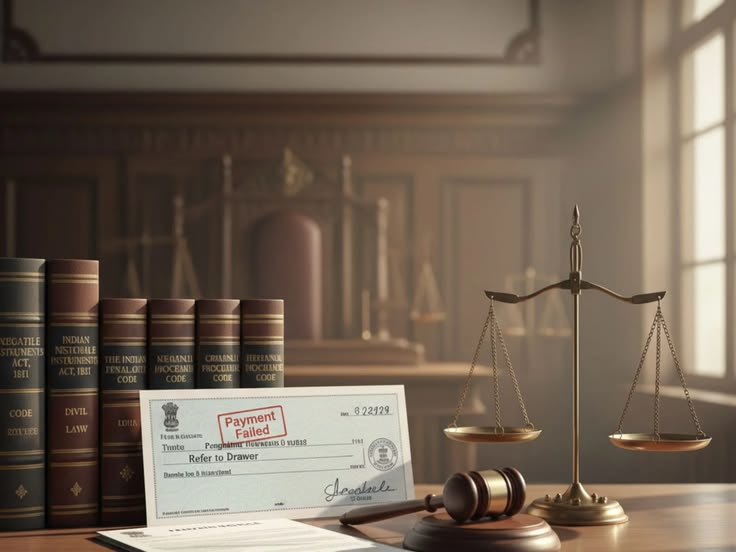
At Delhi Legal Beagle, we provide professional legal guidance and representation in cheque bouncing cases, assisting individuals, businesses, traders, and creditors dealing with dishonoured cheques and unpaid financial obligations. Our services include legal assistance in cheque dishonour disputes, statutory notices, payment recovery, and court proceedings under the Negotiable Instruments Act, 1881, particularly Section 138, where applicable.
Our approach focuses on reviewing cheque details, bank return memos, transaction records, and supporting documents to determine the appropriate legal course of action. Whether a matter involves recovering outstanding payments, responding to a legal notice, or defending against a cheque dishonour complaint, we assist clients with legal documentation, case preparation, and representation before the competent courts.
We assist clients in preparing and issuing statutory demand notices within the prescribed time limits following cheque dishonour.
We provide legal assistance in preparing and filing complaints under Section 138 of the Negotiable Instruments Act, 1881, where the statutory requirements are satisfied.
We represent individuals and businesses facing cheque dishonour complaints by examining transaction records, supporting evidence, and available legal defences.
We assist businesses, vendors, and service providers in pursuing remedies concerning dishonoured cheques issued against legally enforceable debts or liabilities.
We provide legal guidance in cheque dishonour matters arising from loans, repayment arrangements, and other financial transactions.
A cheque bouncing case may arise when a cheque is returned unpaid by the bank. Under Section 138 of the Negotiable Instruments Act, 1881, dishonour for specified reasons may attract legal consequences if the statutory requirements are met.
The payee or holder in due course generally must issue a written demand notice within 30 days of receiving information from the bank about the cheque's dishonour.
The drawer generally has 15 days from receipt of the statutory demand notice to pay the cheque amount. If payment is not made, a complaint may become maintainable subject to the applicable statutory requirements and limitation period.
Yes. Parties may explore settlement at an appropriate stage. The legal effect and procedure for recording or concluding the matter depend on the stage of proceedings and applicable law.
Relevant documents may include the original cheque, bank return memo, copy of the statutory notice, proof of notice delivery, transaction records, invoices or loan documents, and other evidence establishing the legally enforceable debt or liability.
F-206 B-5, Sector-3, Rohini, Delhi-110085
The information provided under this website is solely available at your request for informational purposes only, should not be interpreted as soliciting or advertisement. We are not liable for any consequence of any action taken by the user relying on material / information provided under this website. In cases where the user has any legal issues, he/she in all cases must seek independent legal advice.